
Short questions about the player's own home, a named profile at the end and a tip they can use on their own electricity bill. It ran at the Light booth at the Energy Summit.
The screen opens with a question, not a brand video. While answering questions about their own routine, the person reads what the campaign has to say, finds out which of the five profiles they fall into and leaves with a tip they can use on their own electricity bill. At the end, the brand picks what it takes home: the sign-up and the habits of everyone who played switch on whenever the brand wants them.
Banner, TV on a loop, LED panel: all of it talks, and the person walking by decides whether to listen. Here what the campaign has to say sits under each question, in a single line, and the person reads it because they need it to pick an answer. "An electric shower can be one of the biggest drains on your bill." "Every degree cooler can raise consumption a lot." "Old electrical installations should be checked by a qualified professional." Nobody walks away repeating a slogan. They walk away knowing something they didn't.
The five names show up right at the opening, before the first question, and that is what gets someone to tap the screen without anyone from the team calling them over. Furacão de Watts is funny to get. Mestre da Energia is something to brag about. And the score that comes with it tends to surprise people who walked up sure they already knew the answer.
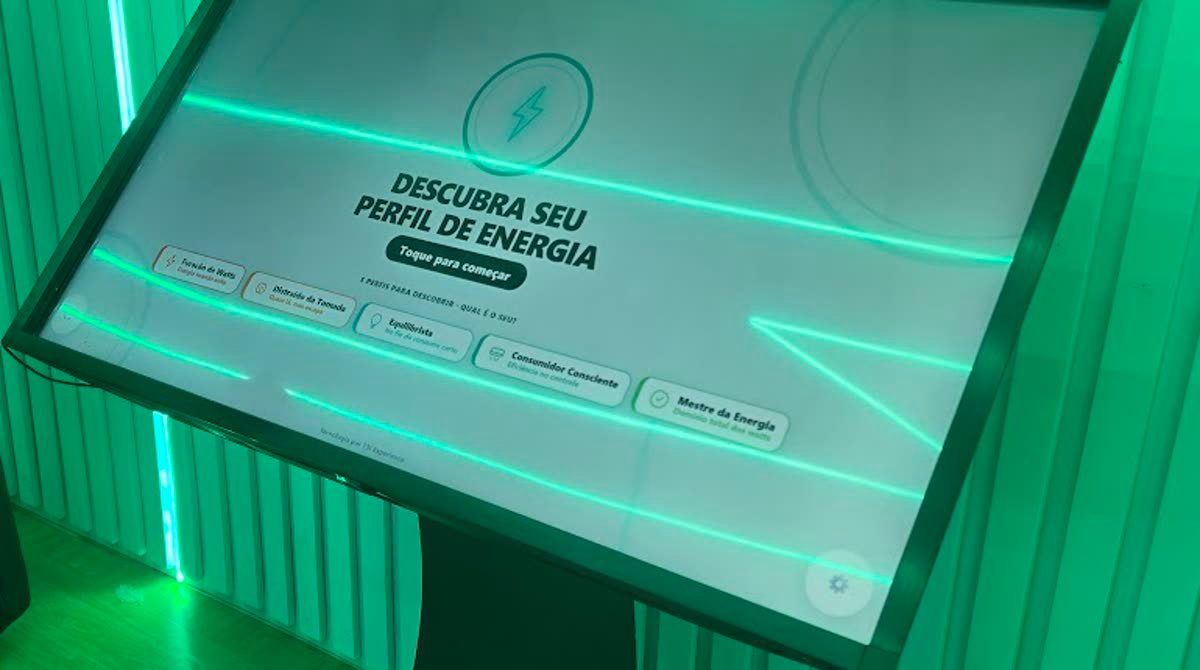
Three screens, from the invitation to the result. None of them needs someone from the team there to explain what to do.
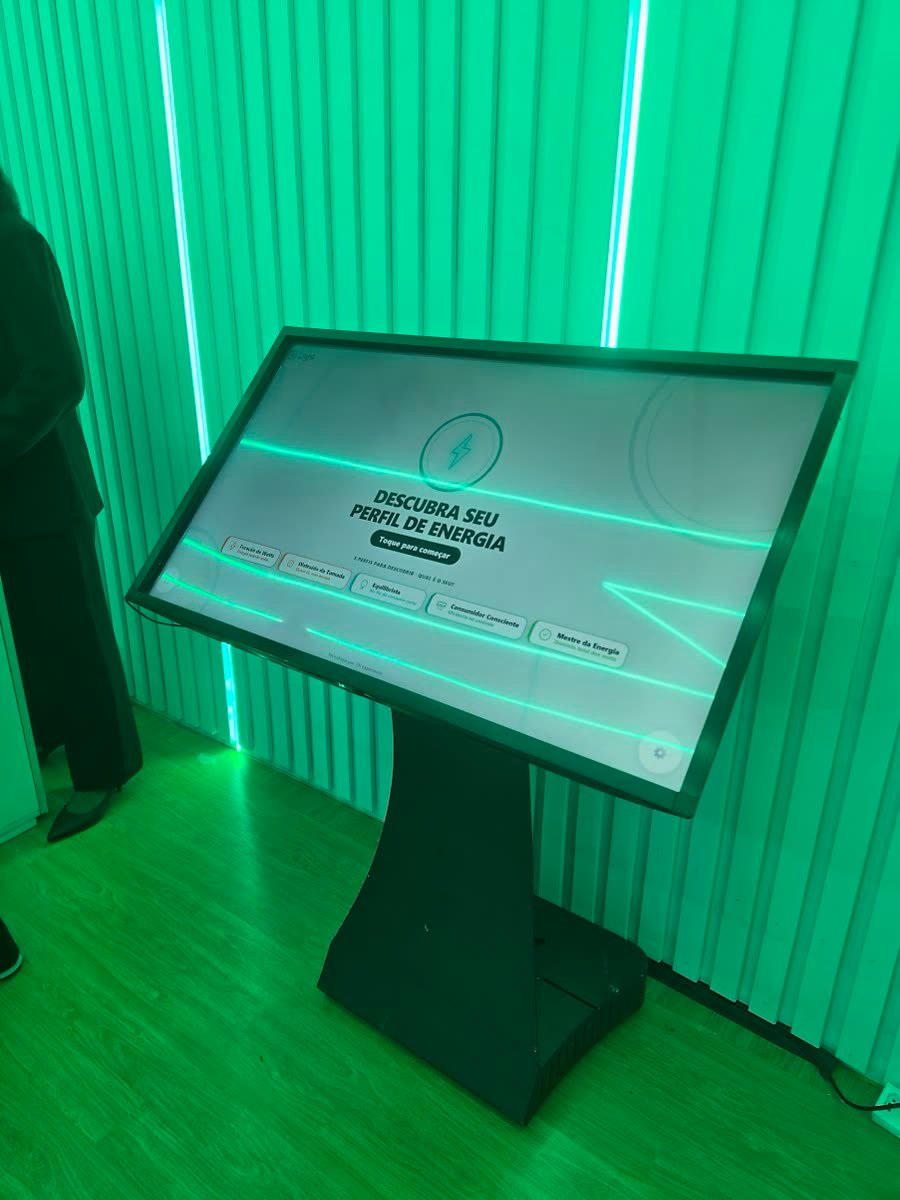
The kiosk sits open and lit, with nobody running it. Up top, the question that gives the game its name. Below it, the five profiles a player can get. Anyone walking past already knows what their time buys before a finger touches the screen.
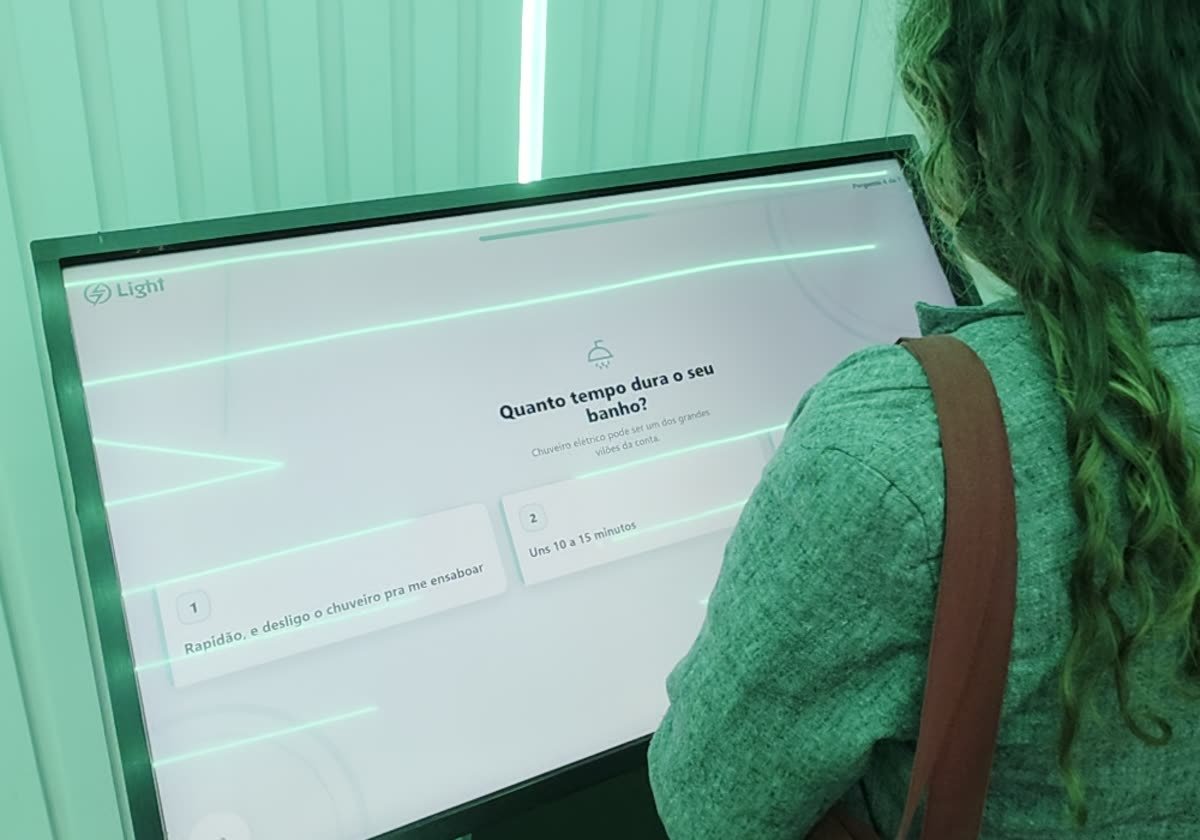
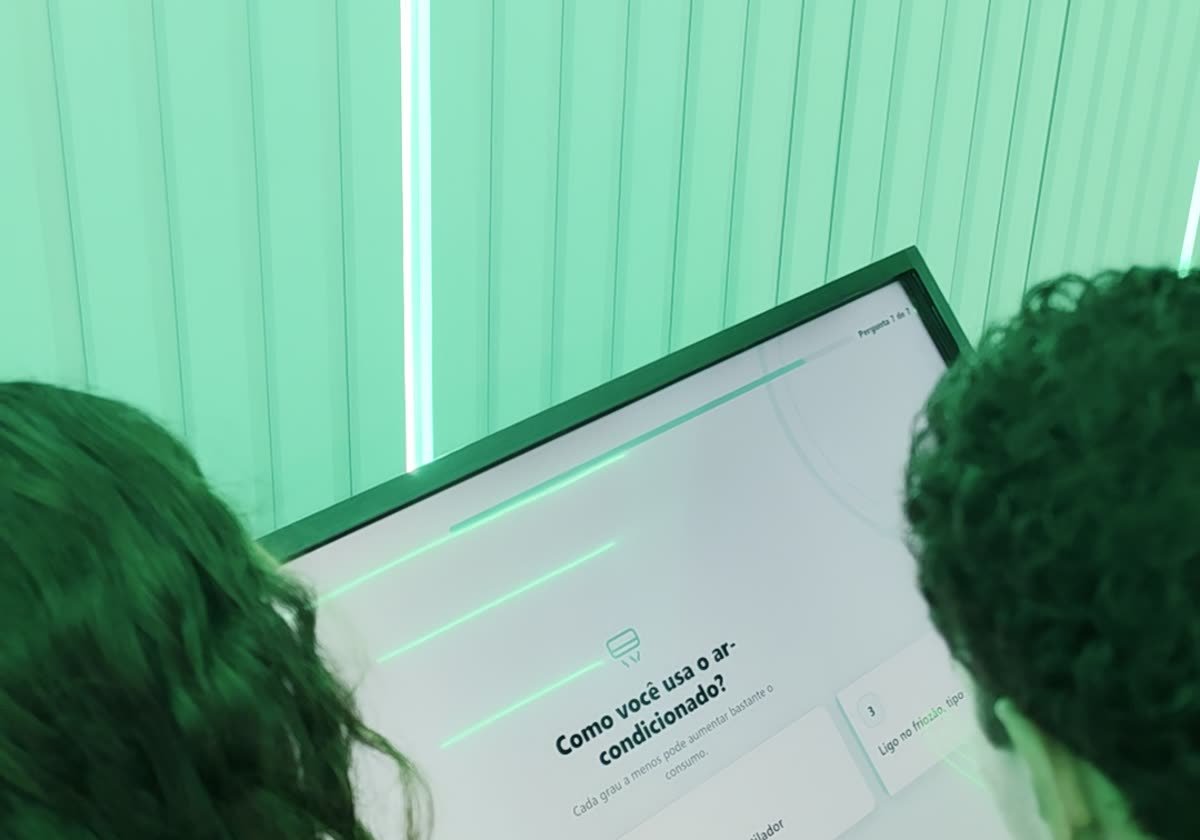
Each screen carries a line-art icon, the question in bold and the options on cards big enough to answer standing up. The subject is always the routine at home: the shower, the air conditioning, the wiring, the moment to replace an appliance. Between the question and the options sits the brand line, and that is what teaches in the second the person spends choosing.
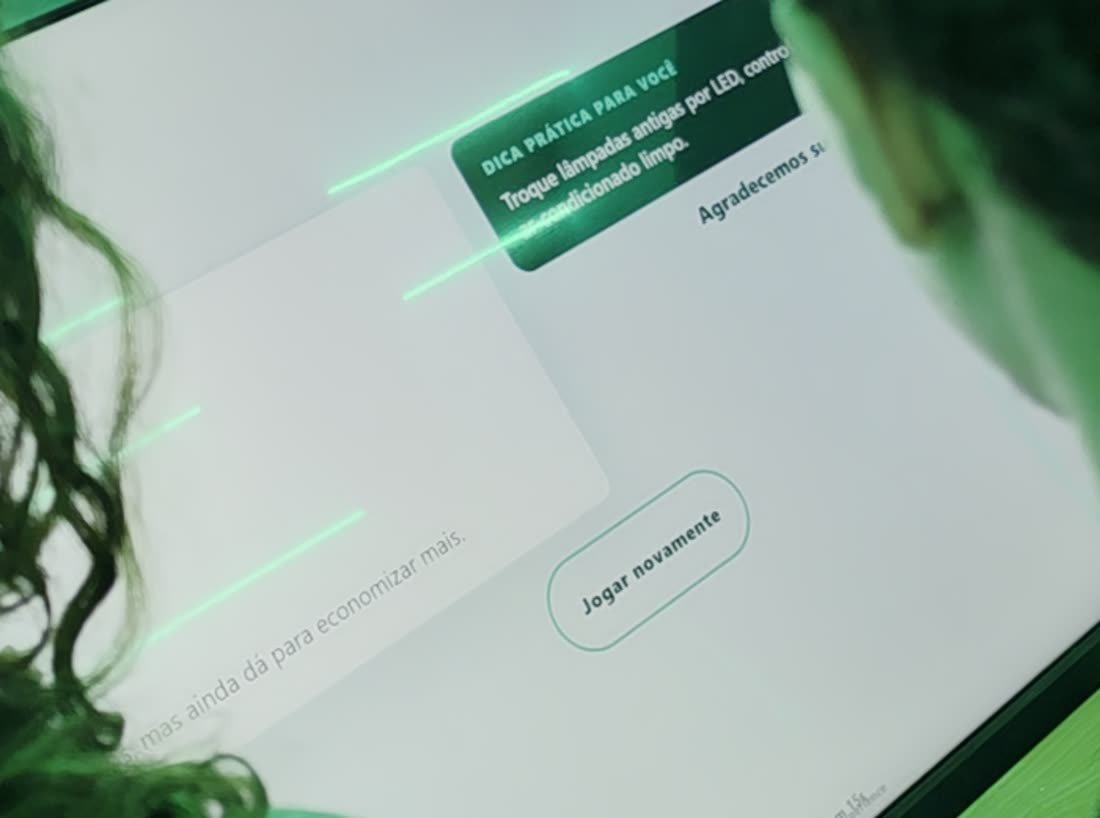
Before it answers, the screen puts up "Analyzing your energy profile" and holds for a few seconds. It is the only moment when the two people in front of the kiosk go quiet. Then the profile comes up big, the points the person scored and a dark box titled "A practical tip for you": swap an old bulb for LED, watch the time in the shower, keep the air conditioning clean. The tip is about the home of whoever just played, not about the brand's product.
A screen standing up is a panel. A screen lying flat is a table where two people fit, side by side. At the event almost nobody played alone, and the line heard most in front of the kiosk was "let's see if you really know how to save energy."
This experience had no prize wheel and no leaderboard: the person marked what they really do at home, with nothing at stake. When the client wants a prize, T3i adds the gift draw right after the profile reveal, with a stock management system, and puts the leaderboard on screen.
One touches the screen, the other points at the option they disagree with. It turns into a friendly argument over who saves more, and both of them learn from it. People gather around without anyone from the team calling them over, and by the time someone from your team walks up the conversation is already open.
The round ends on a play-again button and a countdown that brings the opening screen back with nobody touching it. The kiosk never sits stuck on the result of someone who already walked away.
At this event the brand came away with the conversations at the booth and the message delivered inside the questions. The sign-up was switched off, and it switches on whenever the client wants: then the contact comes off the screen together with the answers, and what arrives is not a list of names, it is a list of names with each person's habits beside it.
Nobody fills in a form to be polite. They fill it in because they want the result. That is why the sign-up comes at the end of the round, when the person is already waiting for their own profile to appear on the screen. Here it was switched off. It switches on whenever you want it.
With the sign-up switched on, every answer becomes a reading of how that home uses energy, tied to the name of the person who answered. The brand leaves the event knowing what its audience does day to day, not what they would say in a quick survey in the aisle.
The tip at the end is about the home of whoever played, and the lines under the questions landed along the way. It is the campaign message arriving at the one moment the person wants to hear it: when the subject is them.
A short question, one line of information, answer cards, a profile with a name and a practical tip. That is the structure. What goes inside it is written for your campaign.
The same screens, with questions about spending and saving habits. The visitor finds out how they handle their own money and leaves with a tip that fits their budget.
Sleep, movement, screens before bed. The line under the question becomes the advice the health plan wants the person to take home.
How they choose, what weighs most in the decision, what they give up. The result gives a type the visitor recognizes and talks about with the person next to them.
How they manage their time, where they get stuck, what they have already tried. It is the opening for anyone who has a course to talk about, without starting from the brochure.
From the screen to the content. The questions, the profiles and the tips are written with you before the event, and the prize goes in if you want one.
A VR balloon flight, a photo recreated by AI, the profile game and the word cloud on the big screen, one activation pulling people to the next.
A brand quiz on a kiosk: answer, spin the wheel, find out your gift. The version where the competition is the point of the game.
A brand word search on a big screen: the campaign content goes in through the game, word by word.
T3i brings the kiosk, designs the screen with your campaign's identity, writes the questions, the five profiles and the tips, and runs it on site. If you want, lead capture and a prize draw with stock control come along too. Energy was the subject at Light. Yours can be something else.